
Commercial Roof Snow Load Capacity: How Much Snow Can Your Maine Building Hold?
During heavy Maine nor'easters, facility managers and commercial building owners face a high-stakes calculation: is the accumulating snow safe, or is the roof structure approaching catastrophic failure? Here is how to calculate roof snow weight and recognize critical warning signs.
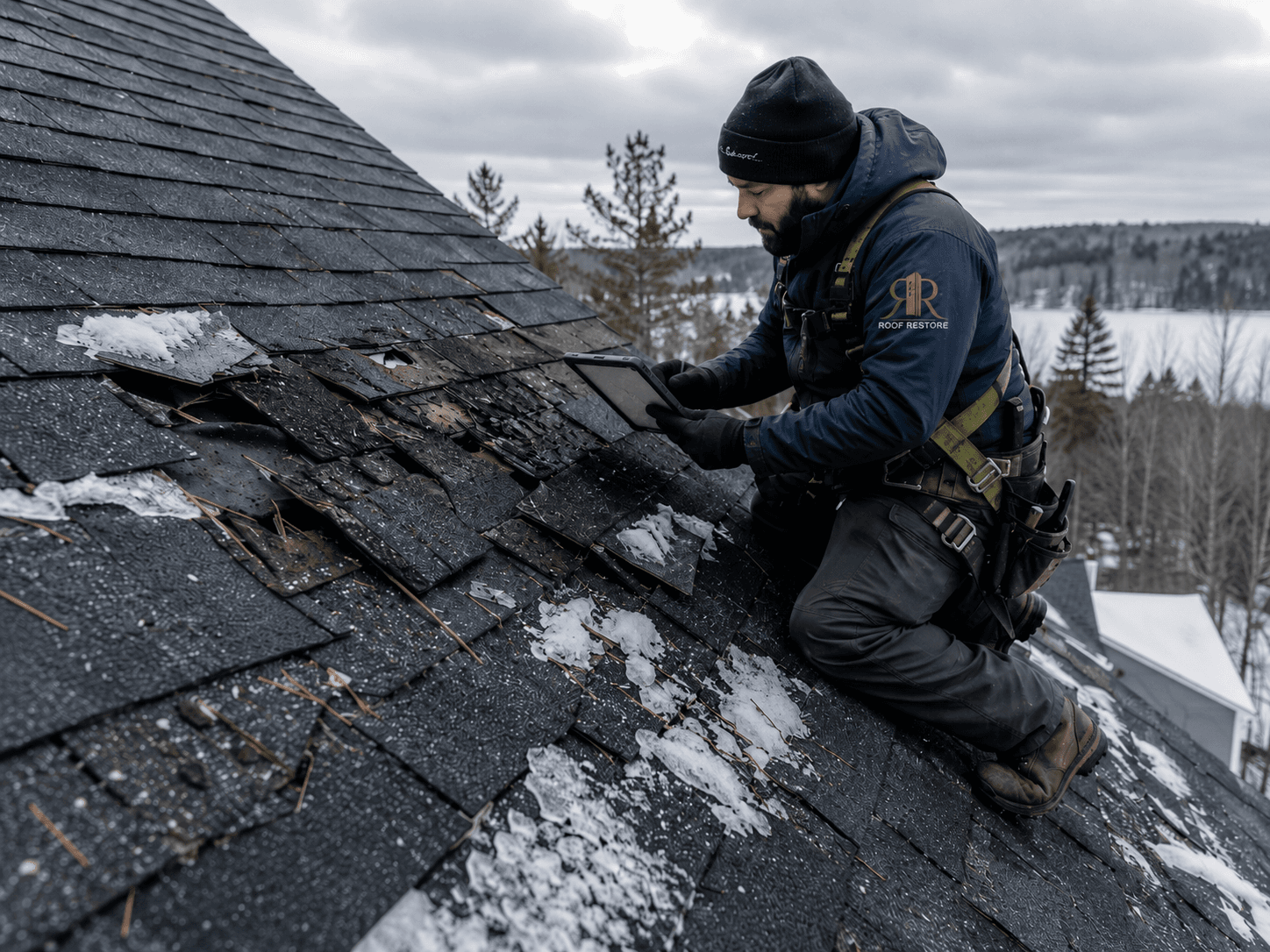
Heavy drifted snow near parapet walls can generate loads exceeding 90 lbs/sq ft.
The Weight of Winter: Snow Density & Load Table
Snow load is not determined by depth alone; it is entirely determined by water density. A foot of dry, fluffy snow puts minimal stress on a building, whereas a foot of rain-soaked snow can collapse steel joists.
| Snow / Ice Type | Weight per Cubic Foot | Weight per 12" Depth (PSF) | Depth to Reach 40 PSF Limit |
|---|---|---|---|
| Fresh, Dry Powder Snow | 3 – 5 lbs/cu. ft. | 3 – 5 lbs / sq. ft. | 8 to 12 Feet (Low Risk) |
| Settled / Packed Snow | 12 – 18 lbs/cu. ft. | 12 – 18 lbs / sq. ft. | 2.2 to 3.3 Feet |
| Rain-Soaked, Heavy Wet Snow | 20 – 32 lbs/cu. ft. | 20 – 32 lbs / sq. ft. | 1.2 to 2 Feet (CRITICAL RISK) |
| Solid Ice (Ice Dams / Ponding) | ~57 lbs/cu. ft. | ~57 lbs / sq. ft. | 8 to 9 Inches (IMMEDIATE DANGER) |
5 Critical Warning Signs of Commercial Roof Deflection & Overload
If your building exhibits any of these internal structural symptoms during or after a storm, evacuate vulnerable areas and call for emergency structural assessment immediately:
When roof trusses deflect downward under load, they press down on interior non-load-bearing partition walls, warping door jambs.
Metal decking shearing against steel bar joists or wood rafters popping under extreme compression tension.
Sprinkler heads or electrical conduit pipes pulling downward away from the ceiling plane.
Melted snow pooling in the center of the roof rather than flowing toward scuppers or internal roof drains.
The Parapet & HVAC Snow Drift Hazard
In Maine, roofs rarely collapse under uniform snow load. Collapses almost universally occur due to unbalanced drifting. Strong coastal winds blow across expansive open roof areas and deposit massive, triangular snow drifts against:
- High parapet walls on the leeward side of the building.
- Large rooftop HVAC units and chillers.
- Step-downs between multistory roof elevations (e.g., a 2-story office connected to a 1-story warehouse).
A building engineered for 40 PSF can easily experience 90 to 110 PSF in drift pockets, causing localized structural failure.
Safe Snow Removal: Why Metal Shovels Destroy Commercial Warranties
When panic sets in, facility managers often send maintenance crews onto the roof with standard metal shovels, ice picks, or snow blowers. This is a critical mistake:
Membrane Punctures: In freezing temperatures, TPO and PVC single-ply membranes become brittle. A metal shovel edge hitting a hidden seam or fastener head can slice through the 60-mil membrane, creating dozens of immediate leaks.
Voided Manufacturer Warranties: Carlisle, Firestone, and Johns Manville explicitly void NDL (No Dollar Limit) warranties if roof membranes are damaged by unauthorized mechanical tools during snow removal.
The Professional Protocol: Maine Roofing Scapes uses specialized plastic polymer scoops leaving a 2-inch protective snow buffer, paired with low-pressure hot steam systems to clear internal roof drains and scuppers without touching the membrane surface.
Worried About Heavy Snow Load on Your Building?
Call Maine Roofing Scapes for priority commercial snow clearing, roof drain steam defrosting, and certified structural load assessments.