
Emergency Storm Damage Roof Repair in Maine: 2026 Insurance Claim Steps, Tarping & Freeze-Thaw Leak Detection
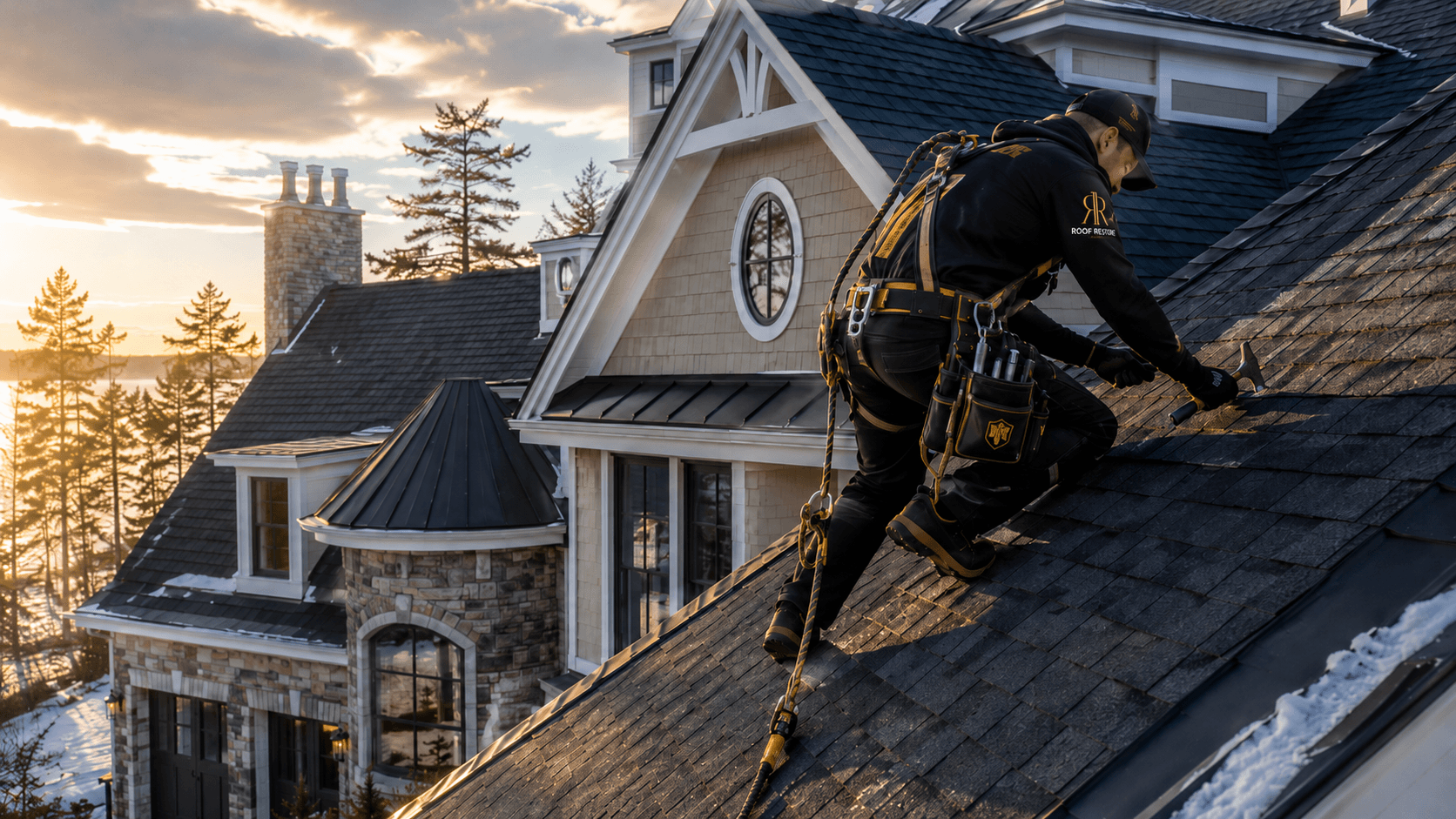
Immediate Action Summary: What to Do in a Roof Emergency
During a severe Maine storm or nor'easter, your first priority is mitigating interior water damage by safely capturing water, photographing all damaged areas, and contacting an emergency roofing specialist for commercial-grade structural tarping ($450–$1,600). Homeowners insurance covers sudden wind, hail, and tree storm damages, but policies require the property owner to immediately mitigate ongoing leaks to prevent claim denial.
The Unique Physics of Maine Storm Damage: Nor'easters & Freeze-Thaw Shocks
Roofs in Maine endure weather stresses unlike almost anywhere else in the United States. Between coastal gusts topping 70–80 mph during winter nor'easters and violent freeze-thaw cycles that shift temperatures by 40 degrees in 24 hours, roofing materials are tested to their structural limits.
When high winds sweep across coastal Maine (such as Casco Bay, Kennebunk, Bath, and Belfast), they create localized low-pressure zones above the roof ridge. This aerodynamic effect lifts asphalt shingle tabs, breaking the thermal sealant bond. Once the seal is broken, driving rain and melted snow are pushed uphill underneath the underlayment, entering the roof deck.
Identifying Storm Damage Types & Repair Urgency
| Damage Type | Primary Cause | Immediate Risk | Required Action |
|---|---|---|---|
| Missing / Blown-Off Shingles | Coastal wind gusts > 60 mph | High: Exposed underlayment weathers in 48 hours | Tarping + architectural shingle section splice |
| Tree Limb Impact / Punctures | Heavy ice load breaking white pine limbs | Critical: Broken rafters and water flood | Structural shoring + deck plywood replacement |
| Chimney & Valley Flashing Detachment | Wind suction + thermal expansion | Moderate: Leaks channel behind drywall | Reglet re-flashing with polyurethane seal |
| Freeze-Thaw Seam Separation (Commercial) | Water expansion in flat roof seams | High: Saturated commercial insulation | Elastomeric membrane patches & core scan |
The 5-Step Storm Damage Insurance Claim Protocol in Maine
Navigating homeowners or commercial insurance claims can be intimidating. Following this exact sequence prevents claim denials and maximizes payouts for full roof repairs:
- Document Before Touching: Take wide and close-up photos of interior water damage, fallen shingles on the ground, dented gutters, and any tree debris.
- Execute Immediate Emergency Mitigation: Maine insurance policies contain a legal clause requiring the policyholder to take reasonable steps to prevent further damage. Call Maine Roofing Scapes & Repairs for emergency tarping; keep the receipt as it is typically reimbursed 100%.
- Contact Your Insurance Carrier to Open a Claim: File the claim and request a claim number. Mention specific storm dates (e.g., "windstorm of October 14th") so adjusters can reference verified weather station wind records.
- Schedule an On-Site Roofing Specialist to Meet the Adjuster: Never let an insurance adjuster inspect your roof alone. Insurance company adjusters frequently miss hidden hail micro-fractures or wind-lifted tabs. Having our project manager walk the roof alongside the adjuster ensures all damage is included in the scope of work.
- Review the Scope of Work (ACV vs. RCV): Ensure the insurance estimate includes replacement cost value (RCV) and accounts for current Maine building codes, such as mandatory ice and water shield on eaves.
Critical Warning: What NOT to Do During an Active Storm
- Do NOT climb onto a wet, snow-covered, or wind-blown roof yourself: Falls from frozen roof decks are the #1 cause of catastrophic contractor and homeowner injuries in Maine.
- Do NOT sign an immediate "Assignment of Benefits" with transient out-of-state storm chasers: Out-of-state crews flood Maine after major storms, slap on subpar patches, collect your initial insurance check, and disappear before winter leaks return.
- Do NOT ignore a small ceiling stain: A discolored spot on drywall often represents 5 to 10 gallons of water absorbed in the attic insulation. Left unchecked, toxic mold develops within 48 hours.
Storm Damage FAQs
Can shingles be replaced in the middle of a Maine winter?
Yes, with specialized cold-weather techniques. Standard asphalt shingles become brittle below 40°F and require manual hand-sealing with asphalt roof cement since the sun will not naturally activate the thermal adhesive strip until spring.
Will filing a storm damage roof claim increase my insurance premiums?
Unlike car accidents, weather-related storm damage is legally classified as an "Act of God" or non-preventable loss. In Maine, insurance companies typically cannot raise your individual policy rate solely for filing a single legitimate storm damage claim.
Need Immediate Emergency Roof Tarping or Storm Leak Repair?
Our crews are stationed across Maine with heavy-duty commercial tarping gear, shrink-wrap protection, and emergency repair materials. Call our dispatch hotline immediately.